01
AI + Accountability
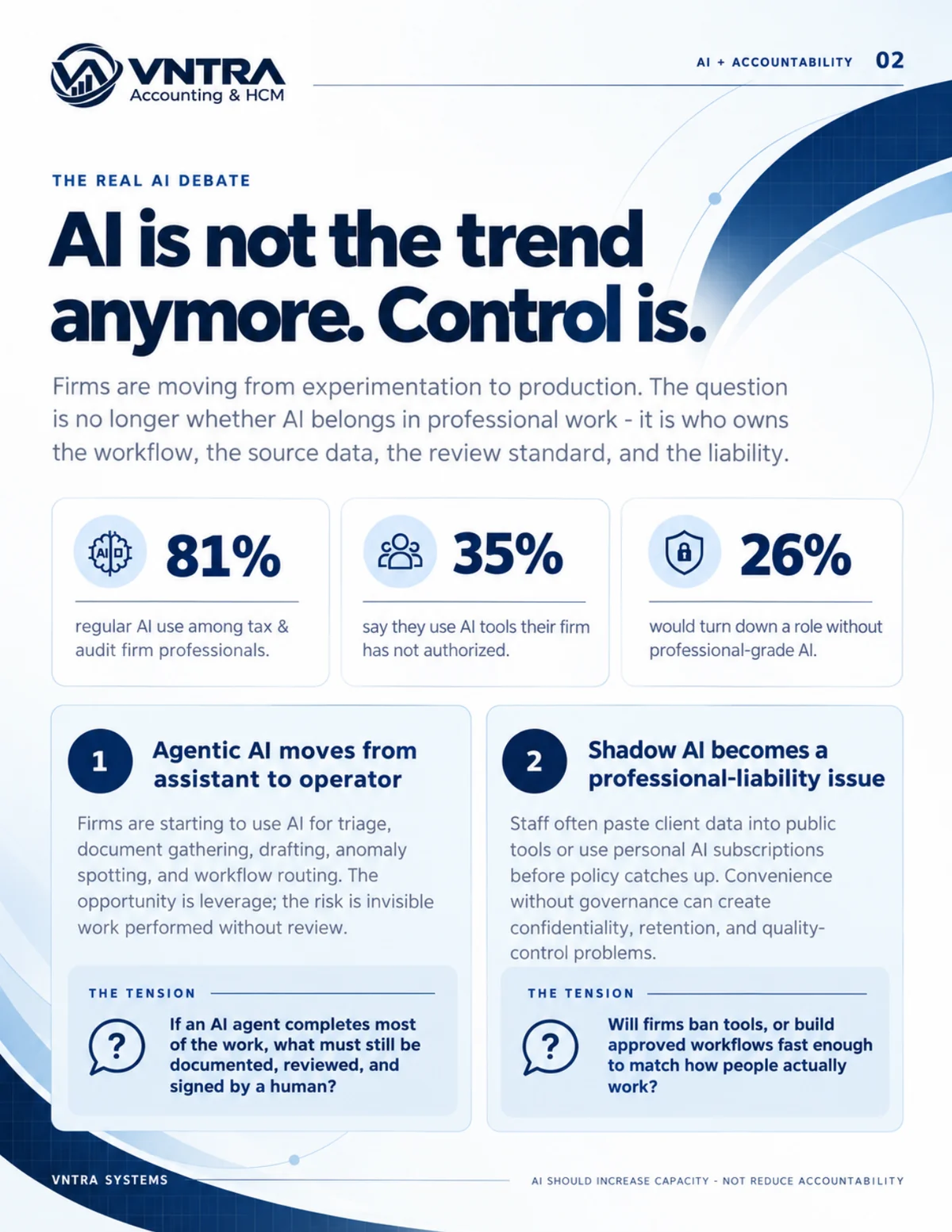
The debate is shifting from whether firms use AI to who controls the workflow, source data, review standards and liability.
AI is moving into production. Firm ownership is changing. Talent pipelines are being rewritten. Clients want more advice. Payroll risk and worker classification are getting harder. This six-page research brief turns those shifts into practical questions for accounting, tax and payroll firms.
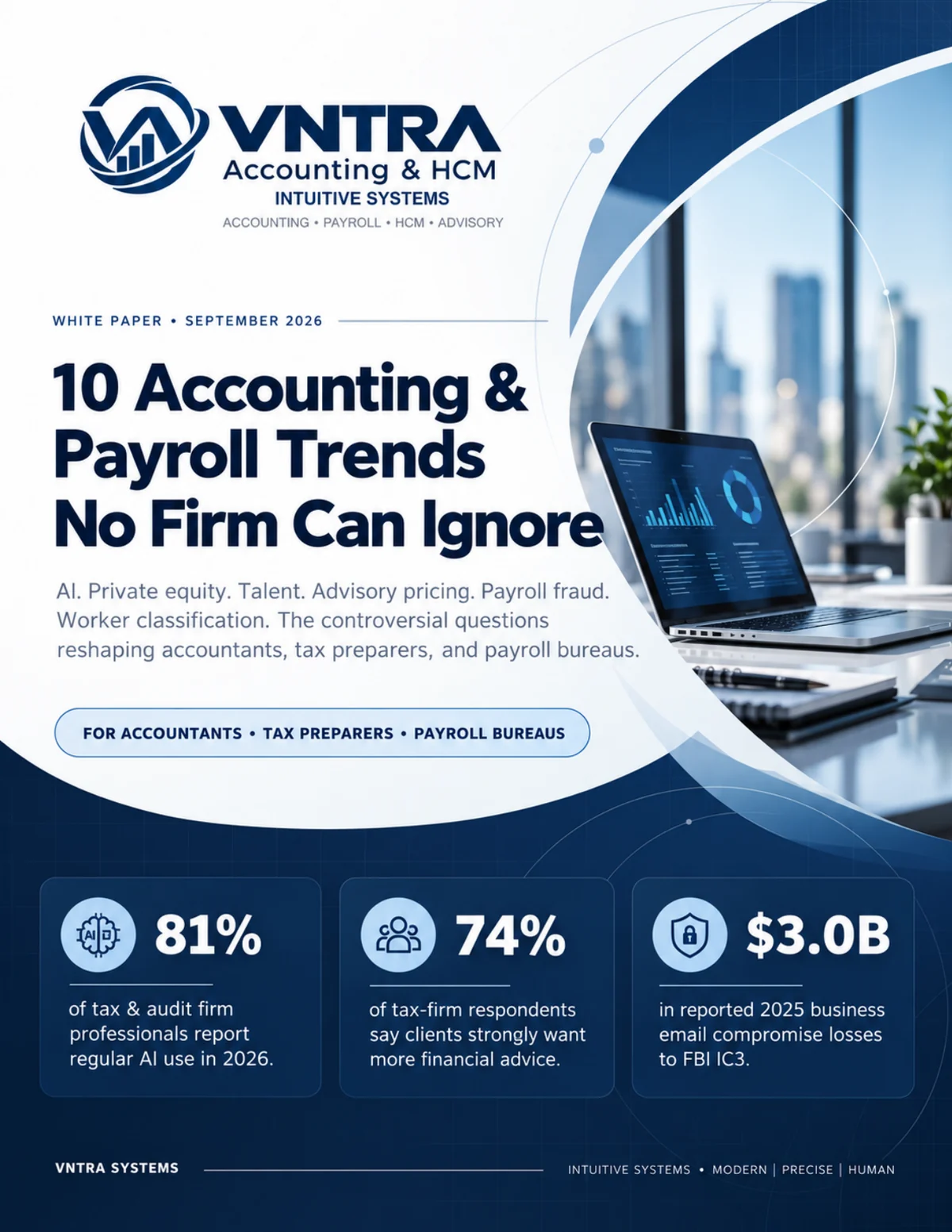
The paper is built around ten trends spanning AI, ownership, talent, advisory economics, payment risk, workforce flexibility and regulatory complexity.
The white paper organizes the ten trends into a practical view of where firms are gaining leverage and where new risk is appearing.
The debate is shifting from whether firms use AI to who controls the workflow, source data, review standards and liability.
Private equity, succession, alternative CPA pathways and the talent pipeline are converging into one strategic capacity question.
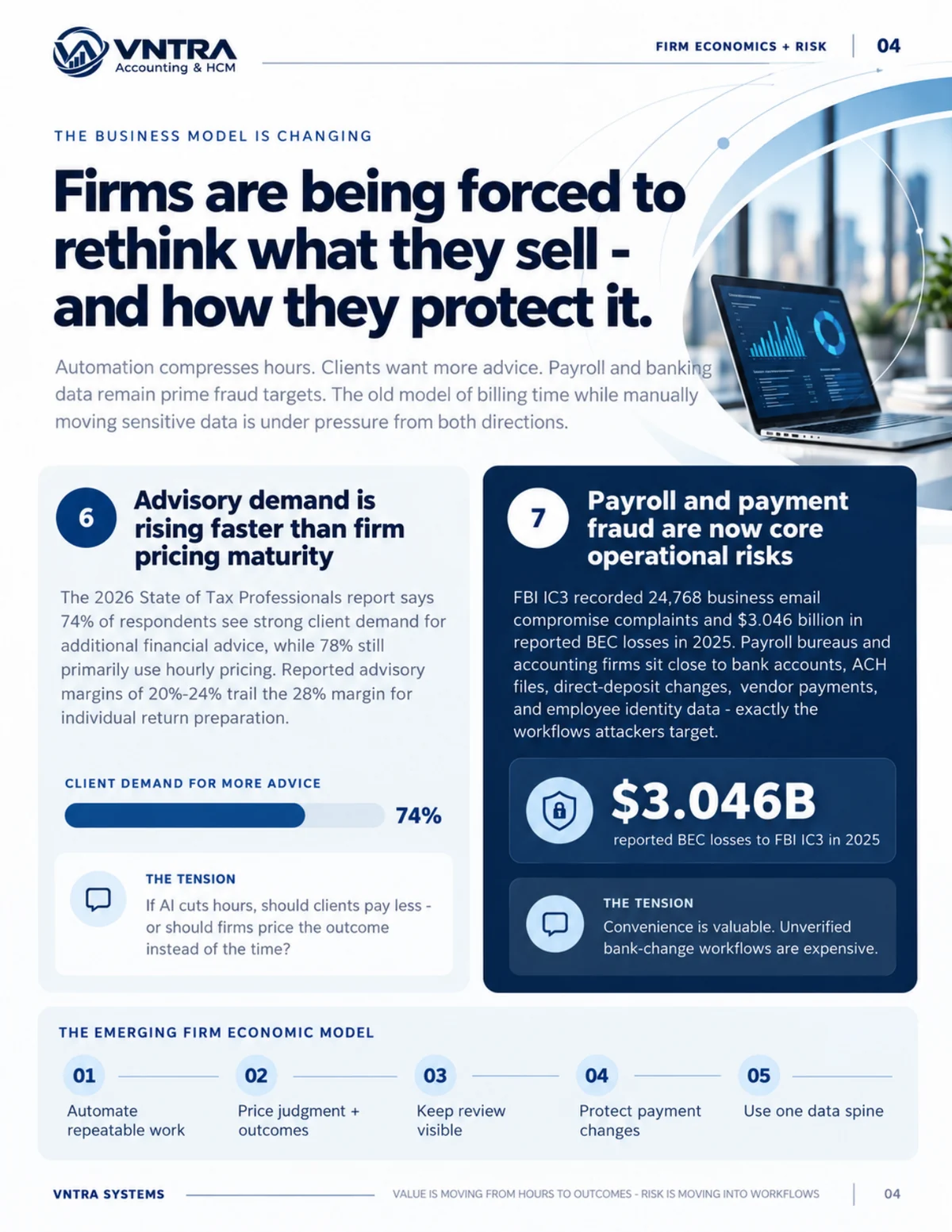
Automation is compressing hours while clients ask for more advice, forcing firms to rethink pricing, review and protection of payment workflows.
Earned wage access, worker classification, state payroll programs and labor rules are expanding the advisory and compliance role of firms.
Technology is not arriving in isolation. AI adoption, changing ownership structures, staffing pressure, advisory demand, payment fraud and evolving workforce rules are all pushing on the same operating model. Firms that treat each issue as a separate software decision can end up with more systems, more reconciliation work and more places for client data to disagree.
The stronger response is operational: define who owns the workflow, which data is authoritative, where review happens, how payroll and accounting records connect, and how the firm documents decisions when the rules change.
As AI tools move deeper into triage, document gathering, drafting and anomaly spotting, the value is obvious—but so is the need for review standards. Firms need clear rules around approved tools, client data, human review, retention and responsibility for the final work product.
Automation can reduce manual hours at the same time clients expect more interpretation and advice. That creates a pricing question: does the firm keep charging for time, or build a model around judgment, outcomes and ongoing advisory value? The white paper frames this as a transition from selling processing capacity to selling controlled, informed outcomes.
Payment workflows remain attractive fraud targets, while earned wage access, contractor classification, multi-state work and paid-leave programs add more moving parts. For payroll providers and accounting firms, the competitive advantage is increasingly the ability to combine speed with verification, documentation and connected data.
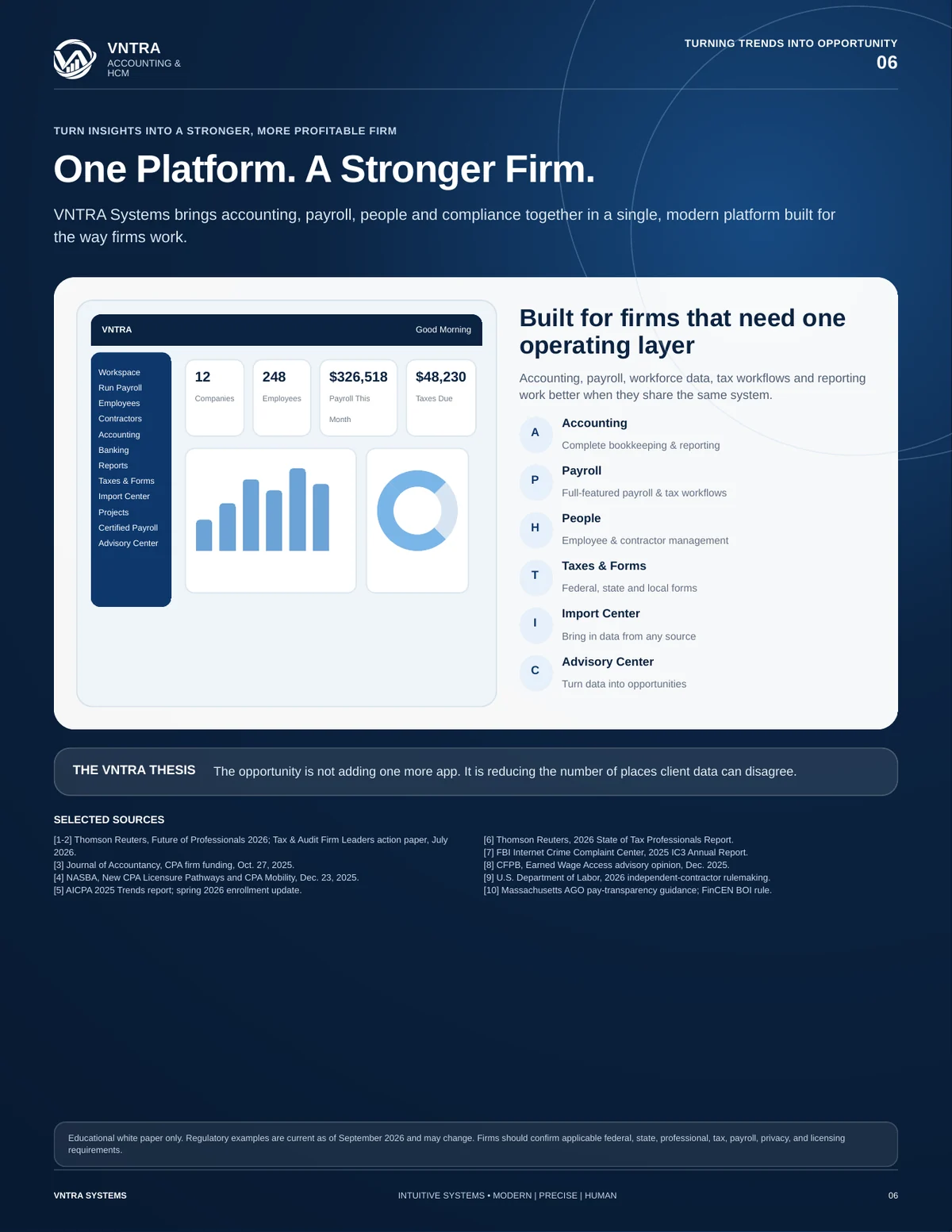
The paper closes with the VNTRA thesis: accounting, payroll, workforce data, tax workflows and reporting are stronger when they share the same system. The opportunity is not simply to add new technology; it is to reduce the number of places where the business record can diverge.
Yes. Submit the short form above and the download is available immediately.
The report is six pages and is designed as a concise strategic briefing rather than a long technical report.
It is written for accountants, tax preparers, payroll bureaus and firms thinking about technology, staffing, advisory services, compliance and risk.
Yes. The final page includes selected sources supporting the trends and statistics cited throughout the report.
Explore the platform or request a focused walkthrough of accounting, payroll and workforce workflows.